
Doing Good Without Going Broke
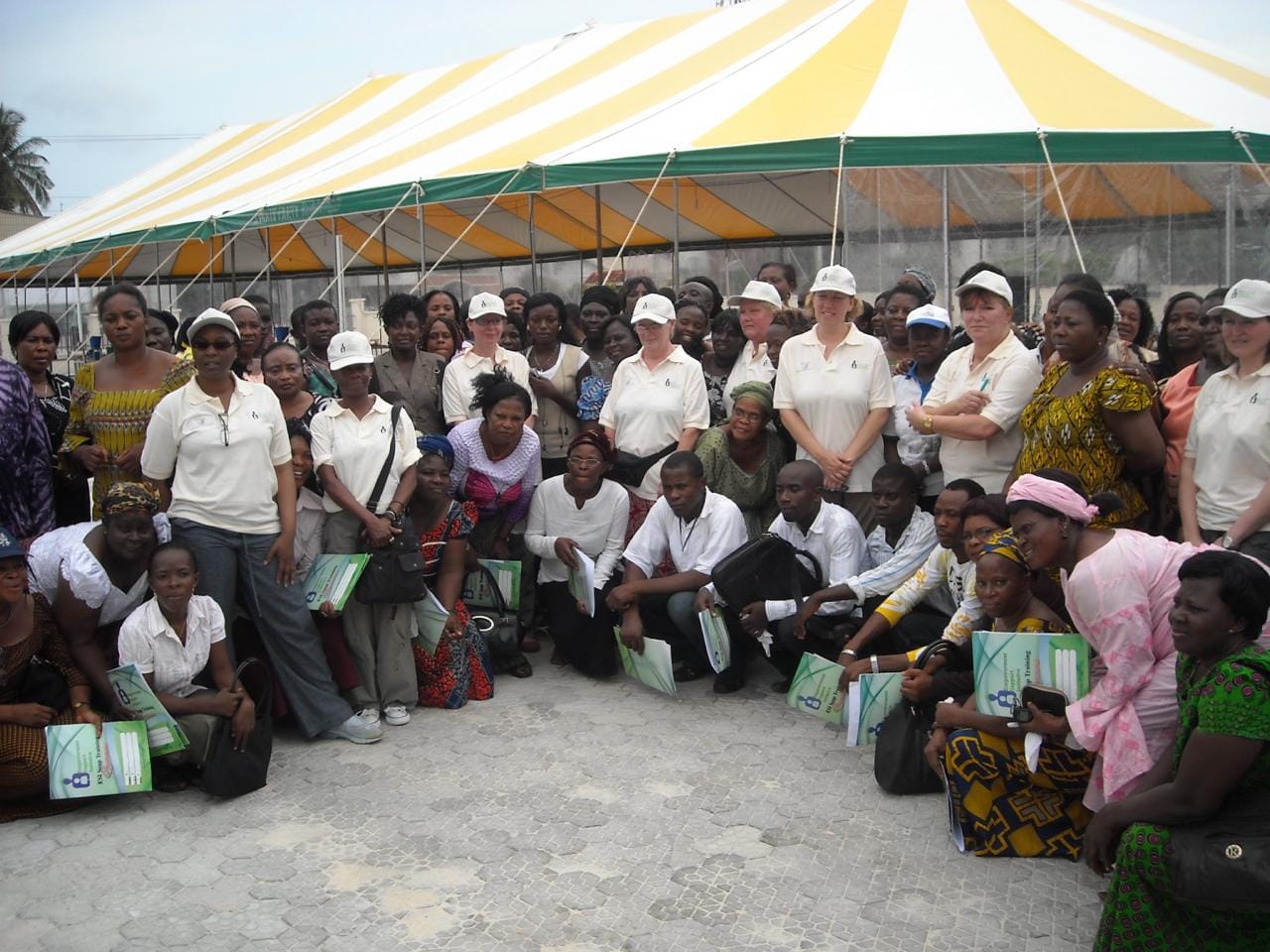
Training 3,000 people in Port Harcourt Nigeria on how to make soap
One of the reasons I love working with entrepreneurs is that the vast majority of people who approach me genuinely want to do some good in the world.
Some want to improve people's lives through the products or services they create. Some are passionate about the environment and want the way they run their businesses to reflect that. Others want to support communities or causes that matter deeply to them.
And some – and this is the one that tends to make my commercial antennae twitch – start their businesses determined to give a percentage of what they earn to a favourite cause.
All admirable intentions.
Unfortunately, admirable intentions don't pay the bills.
As a fairly hard-nosed commercial animal – who does have a heart hidden away somewhere – part of my job is often to temper these ambitions sufficiently to give the business itself a fighting chance of surviving.
Experience has taught me that being completely uncompromising about how you want to operate can sometimes result in costs, complications and commitments that a young business simply cannot absorb. And promising a percentage of revenue or profit to a cause before you have established how much money the business needs to survive and grow can become a very uncomfortable promise to keep.
There are, of course, hugely successful companies that have built giving back into the very foundations of their brands. But there is an enormous difference between what an established company with healthy margins can afford to do and what is sensible for a founder trying to build something from the ground up on a small budget.
My view, in business as in life, is fairly simple.
Build something strong enough to do some serious good.
A healthy, profitable business has the power to create jobs, support other businesses, fund projects, influence an industry and contribute substantial sums to causes its founder cares about. A struggling entrepreneur can certainly make a difference too, but on the grand scale of things it may be a teeny-weeny one – and the stress might kill you in the process.
Why settle for that?
If you genuinely want your business to make a difference, your first responsibility is to make sure there is still a business around to do it.
And if I haven't persuaded you to postpone pledging away a percentage of your income, there is another approach I much prefer.
Choose something tangible.
Go to the community or organisation you want to support and ask them what they actually need.
Perhaps they need to plant a woodland. Perhaps a hospice needs a particular piece of equipment. Perhaps a village needs clean water, a school needs computers or one family needs help rebuilding their home.
Find a specific project that is measurable, achievable and requires an amount of money you can realistically help to raise.
Then make it part of your business.
You might choose one project each year, or run a campaign during a season when you know turnover is traditionally stronger. Set a target. Tell your customers exactly what you are trying to achieve. Show them where the money is going. Let them follow the project and become part of the story.
Instead of vaguely announcing that "a percentage of our profits goes to good causes", you can say:
"Together, we're raising £10,000 to put clean water into this village."
There is a beginning, an objective and, most importantly, an outcome.
It is more tangible for your customers, more manageable for your cashflow and, I would argue, potentially far more powerful as a piece of marketing because people can see the difference they are helping you make.
And when the project is finished, choose another one.
If the environment is your principal concern, you might also consider working towards B Corp certification. It gives you a framework for looking at the impact of the whole business rather than attaching a worthy cause to one corner of it.
For now, remember this.
Your responsibility as CEO is not simply to have good intentions. It is to build a business that runs smoothly, has a continuous stream of customers and makes a profit.
Because the stronger the business you build, the more good you may eventually be in a position to do.
And surely that's the point.
If you'd like some hard-nosed commercial thinking applied to your very good intentions, book a free 20 minute call and let's see if I can help.

HEY, I'M MELINDA COSS
Thank you for pulling up a chair at my kitchen table this week.
Every week I share another observation about business, reinvention and the curious things I've learnt from a lifetime of building businesses and helping others build theirs.


JOIN MY MAILING LIST

Created with © systeme.io