
AI, Knitters and Other Dangerous Conversations
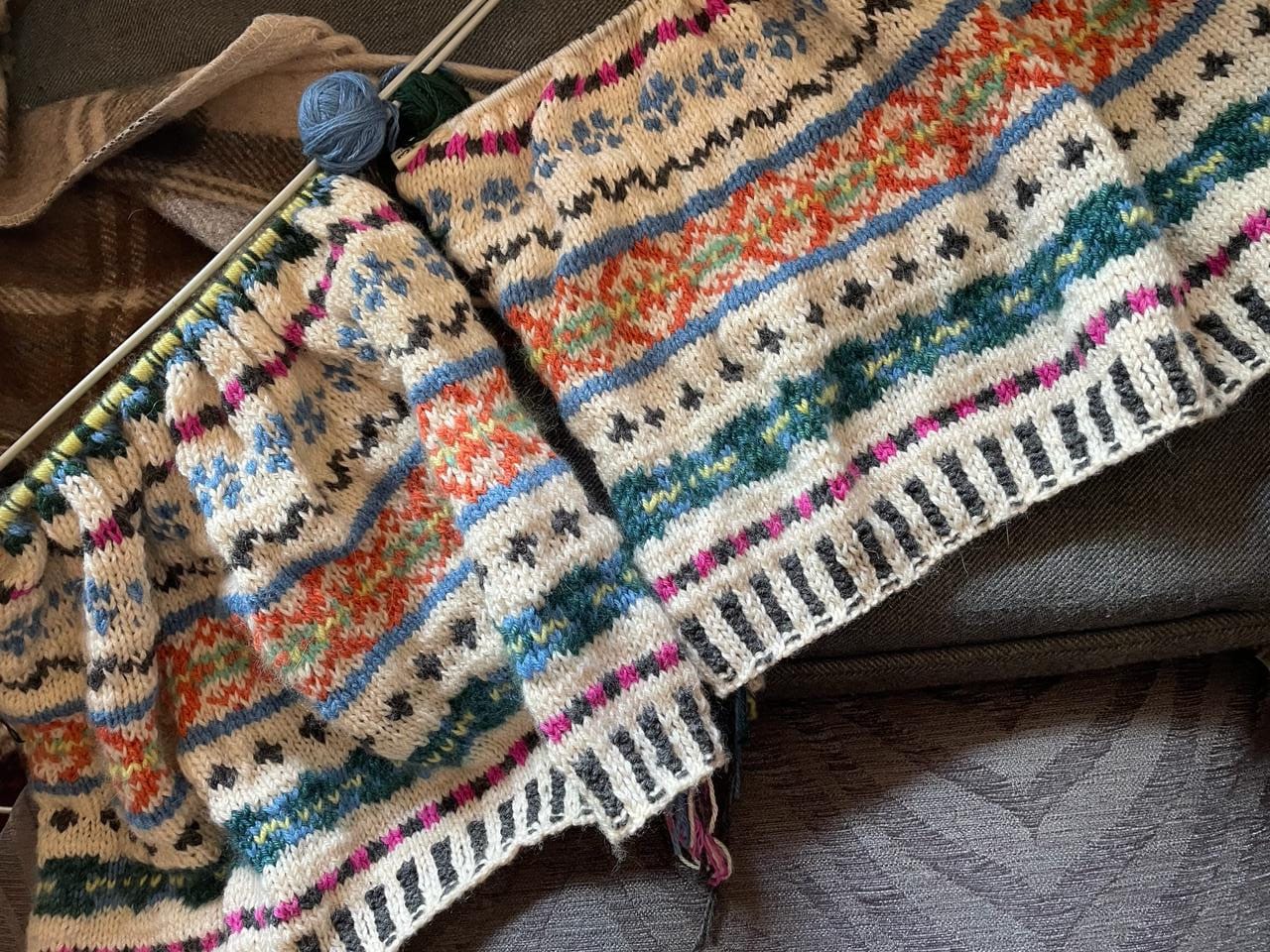
I managed to get myself into big trouble this week on a knitting forum after suggesting that you could upload a knitting pattern to AI, ask it to recalculate the size and alter the tension and more often than not, it would produce the adjusted pattern in a matter of seconds. You'd have thought I'd suggested burning down the local church !
Looking back, I probably should have known better.
Many knitters, spinners and traditional makers have deliberately chosen a slower way of life. Rather than buying a ball of wool, quite a few of the people on that forum would much rather shear the sheep themselves, spend hours washing and carding the fleece, spin it into yarn and then dye it with lichens they probably risked breaking their neck, climbing a tree to collect. I completely understand the attraction because there is something deeply satisfying about making things by hand, learning traditional skills and producing something that couldn't possibly have come off a factory production line.
You couldn't use AI for any of that.
But drafting a knitting pattern?
Apart from taking away the need to be a gifted mathematician, which I most certainly am not, I struggle to see what creativity AI removes from the process. Surely using AI to calculate stitch counts isn't fundamentally different from using a calculator to add up for you or using a washing machine instead of a scrubbing board. It's simply another tool, and tools have always existed to make difficult or tedious jobs easier, quicker and, quite often, more accurate.
The interesting thing that people forget is that AI doesn't actually do the thinking for you. At least, not if you're using it properly. The quality of the answers depends entirely upon the quality of the questions you ask. It still needs your ideas, your judgement, your style and your ability to recognise whether what it's suggesting is sensible or complete nonsense. In that sense, I don't see AI as replacing creativity; I see it as helping me refine my own thinking.
That doesn't mean it comes without dangers.
In fact, I think its greatest weakness has very little to do with technology and everything to do with human nature.
It can make us horribly lazy and unsure of ourselves.
I know this because I've caught myself being exactly that. If you allow AI to do your writing, there comes a point where you begin to lose confidence in your own ability to construct an argument or shape a piece of copy. That isn't a theory I've invented to make a point; it's something I've experienced myself.
Perhaps it's no different from handwriting. There was a time when I proudly hand wrote beautiful letters with a fountain pen in neat cursive script. Nowadays my fingers spend so much time attached to a keyboard that I almost have to think about how to form the letters whenever I pick up a biro to scribble a shopping list.
Or take calculators. For someone like me, whose relationship with numbers has always been 'strained' to say the least, the calculator was nothing short of a gift from heaven. But I also know there was a time when I could recite my nine times table without hesitation and, if I'm honest, I'm not entirely sure I still can. I also couldn't exist without a GPS. Well I could but if you invited me for tea you might well find me a week later in a field about forty miles from where you live - and the tea would have gone cold.
All of which brings me back to AI.
Everywhere I look people seem determined to divide into two opposing camps. One side is convinced it represents the end of creativity (if not the world) as we know it, while the other talks as though it will solve every problem mankind has ever come up against. Personally, I think both positions miss the point.
AI is neither good nor bad. - It's a tool. Like any tool, it can produce remarkable work in capable hands and complete rubbish in the wrong ones.
I use it every single day, not because I can't write, and yes, I do write these ramblings myself, but because it does certain things astonishingly well. If I'm trying to explore an idea, it will happily argue the opposite case. If I think I've solved a problem, it will point out weaknesses in my reasoning. If I'm approaching a business challenge from one direction, it will often suggest another that simply hadn't occurred to me. Another clear advantage is that if it becomes unbearably pompous and keeps insisting it is right you can swear at it and, unlike most human opinion givers, it won't take offence. That sort of intellectual sparring is incredibly valuable.
Where I think AI really earns its keep is in the breadth of ideas it can draw upon. None of us has had the time to absorb every marketing book, psychology paper, business case study or biography ever written, yet AI can often connect ideas from very different sources and present them in ways that might never have occurred to us. That doesn't make its conclusions right, but it can certainly broaden our own thinking.
Of course, there is one important caveat.
AI has an extraordinary ability to sound completely convincing while being spectacularly wrong. I asked it to come up with a list of the books I had written and it added four that I had absolutely no part in writing. Facts, quotations, legal points and statistics should always be checked before they find their way into print.
If you're already a good writer, you possess something AI can never replicate. Humour. Timing. Observation. Those turns of phrase that make people smile because they know exactly who wrote them. Hand too much of the writing process over to AI and those things gradually begin to disappear, it also formats everything to create the biggest impact so every article it produces starts sounding and looking suspiciously like everyone else's.
That's why I don't ask AI to write for me - I ask it to think with me.
As for graphics, despite all the hype, I still think AI has some way to go. Some are genuinely impressive, but plenty still produce people with three hands, six fingers or an eye somewhere in the middle of their forehead, and when there is text involved AI often seems incapable of spelling simple words correctly.
So, for me at least—and perhaps as the most recently expelled member of the many-strands knitting group (I have changed the name in fear of my life) —AI hasn't replaced creativity in the slightest.
If anything, it has made me realise that the real value no longer lies in producing words quickly. The real value lies in having original thoughts worth expressing in the first place, because ideas, judgement and personality have yet to be automated.
And I sincerely hope they never are.
What do you think?
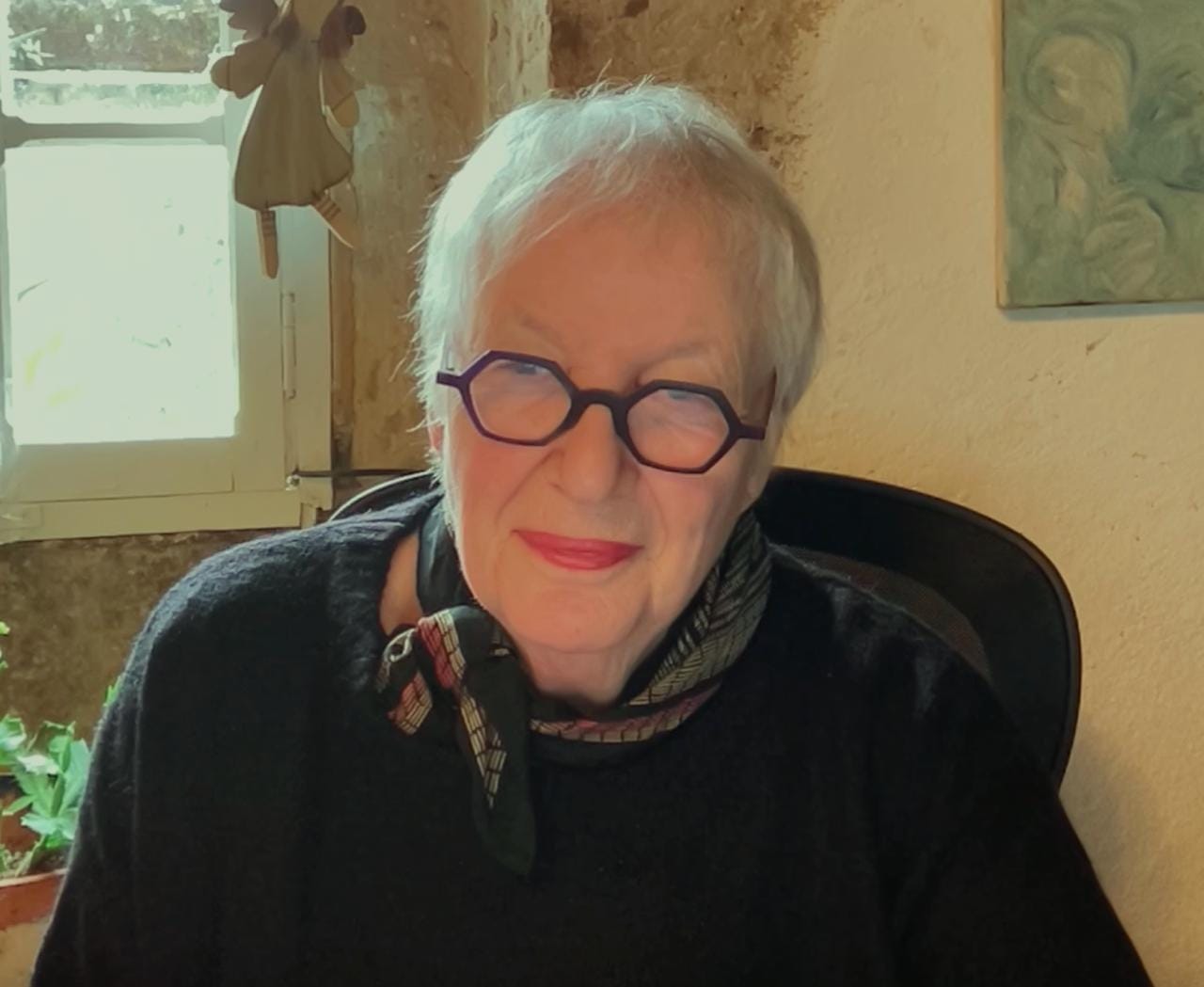
HEY, I'M MELINDA COSS
Thank you for pulling up a chair at my kitchen table this week.
Every week I share another observation about business, reinvention and the curious things I've learnt from a lifetime of building businesses and helping others build theirs.


JOIN MY MAILING LIST

Created with © systeme.io